

The report is the most detailed analysis of our impact we’ve ever produced, drawing on over 6,000 loan records, 48,000 active member accounts, and more than 400 survey responses. One of its central findings is that financial pressure in London cuts across incomes — and so does the benefit of belonging to a credit union.
Download London Mutual Credit Union 2024-5 Impact report
What the data shows
Over the past year, we lent £16.7 million to 5,104 members. Compared to the most realistic alternatives available to each borrower, that lending saved our members an estimated £2.15 million in interest — around £41,000 every week.
That saving reached members at every income level. One in five of our borrowers earns over £50,000 a year. But the impact was largest where it matters most: 43% of all interest saved went to members on benefits, and 28% went to female lone parents.
83% of our lending went to people living in the most deprived half of postcodes in England. More than a third of borrowers rely on benefits as their main income. A third are lone parents.
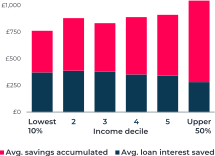
Fair finance isn’t just for the lowest incomes
That’s not the assumption most people make about credit unions. But in London, financial stress doesn’t stop at a certain salary. Housing costs consume more than half the income of the poorest households — and the FCA’s own data shows that the burden of bills has increased at roughly the same rate across every income level over the past year.
One in five of our borrowers earns over £50,000 a year. Behind our figures are NHS staff consolidating credit card debt at 39%, graduates who’ve been living in their overdrafts since university, and service personnel trying to get on the housing ladder. The interest saving reaches all of them.
The impact is still largest where financial need is greatest. Members on the lowest incomes face the highest alternative rates, so they save the most per loan. But the argument for a credit union extends well beyond those on the lowest incomes, and this report makes that case with data.
Borrowing as a ladder, not a trapdoor
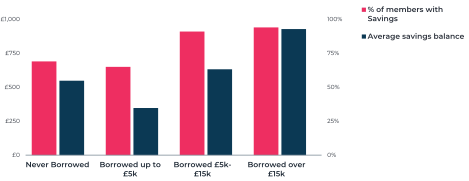
One of the things we’re most proud of is what happens over time. Every LMCU loan includes a ‘save as you repay’ element, so borrowers build a financial buffer alongside their repayments. 96.8% of current borrowers hold a savings balance today.
And the longer someone stays with us, the stronger that position gets. Members who have borrowed more than £15,000 with us over their lifetime are 94% likely to be saving with us, compared to 69% of those who have never borrowed at all. Their average savings balance is nearly three times higher too.
Behind the numbers
The report goes beyond the headline figures. We looked at what members actually write in their loan applications, and what ‘home improvement’ really means for a member on benefits (hint: it’s usually a bed, some flooring, or fixing damp, not an extension).
We looked at how 745 members borrowed for Christmas, how 198 borrowed for funeral costs, and how six members borrowed to leave a domestic violence situation. We looked at the 33 school uniform loans, 100% of which went to women, nearly all lone parents.
We also looked at what changes. Members who return to borrow again save more, report greater financial improvement, and are significantly more likely to recommend us. The data makes the case that affordable credit, done properly, builds financial resilience rather than undermining it.
What comes next
This report marks the most comprehensive picture we’ve ever produced of who we serve and what difference we make. It comes at a moment of real momentum for the sector: the Government’s Financial Inclusion Strategy commits £30 million in new funding for credit unions, and a cross-party London Assembly committee has written to the Mayor calling for greater support for credit unions across the capital. We welcome both.
If you work with an employer, community organisation, or public body that wants to give more people access to fair financial services, we’d love to talk.